

Athlete Stories
Different athletes, different challenges. See how we adjusted training around their goals, limitations, and real lives.
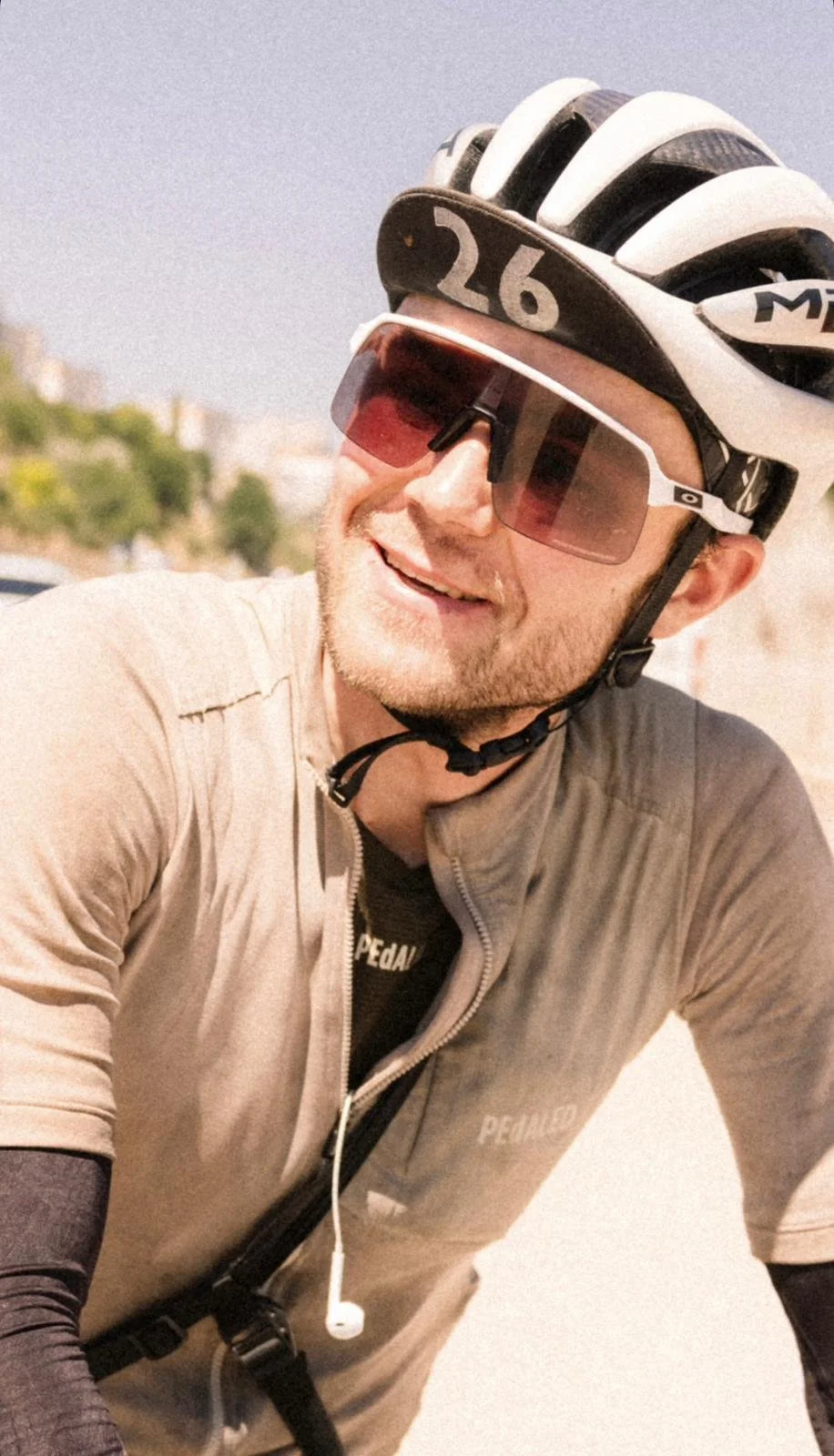
Peter - Building an engine the winter couldn't break
Peter models uncertainty for a living. He's a reservoir engineer in Stavanger - an award-winning one, the kind who presents at conferences and mentors the next generation. His profession is making unpredictable systems behave. And for years, the one system that refused every model was his own body.
Peter has an autoimmune condition. Every season told the same story: build beautifully through summer, get knocked flat in the Norwegian winter, start over from zero in spring. He did what engineers do: optimized harder. More structure, more discipline, more plan. The plans were good. They were just built for a body that doesn't get sick, and his does.
That was the first thing we changed, 6 years ago: we stopped treating his condition as noise in the data and made it the first input. Load managed against how his body was actually responding, not what the calendar said. Recovery treated as training. A winter whose entire objective was to arrive at spring unbroken - because for Peter, an intact winter is the single biggest performance gain available. And alongside the physical rebuild, a mindset rebuild: from "push until something gives" to a project measured in years..
The result. The circle broke. Healthy through the winters and this year Peter won the Race Across East Germany, 1,150 km of it. He's now racing the the Transcontinental Race (~4,000 self-supported kilometers across Europe) for the second consecutive year. The man whose season used to end every December now races distances most people won't drive.
Every athlete on this page started with a fit call. If your situation is this specific, that's exactly what coaching is for.
Robert — Three kids, a career, and 150-kilometer weeks
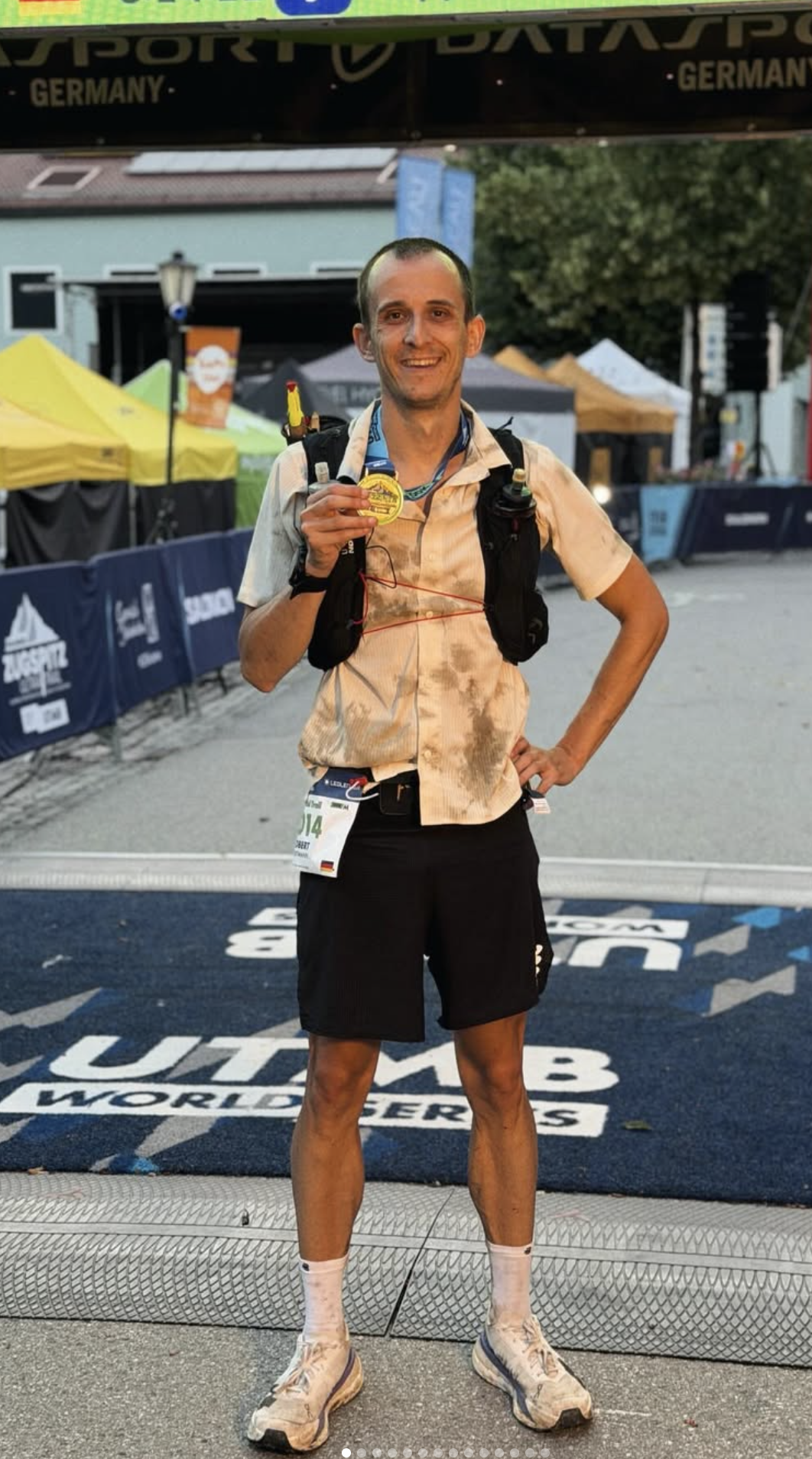
Robert lives in Nürnberg with three small children, a demanding job, and a travel schedule that eats training plans for breakfast. He is, in his own words, a "mediocre trail runner", which tells you more about how Robert talks than about how Robert runs.
When we started, his ceiling was real and it was specific. Around 3,000 meters of climbing into any mountain ultra, things would quietly come apart - not fitness, not willpower, but the legs simply stopping the conversation. The KAT100 in 2025 made it undeniable: the last climb broke him so completely he knew something structural had to change.
We didn't add more running - with his life, "just do more" is a plan for failure, and honestly, it usually is anyway. We hunted limiters instead. The one under the 3,000-meter ceiling wasn't endurance at all; it was local muscular durability, so we built it with tools that fit a flatland life with kids: strength work that transfers to climbing, stairmaster blocks, weighted repeats on a 40-meter hill in Fürth, treadmill grades. Volume rose only as fast as the structure underneath it, roughly 60-kilometer weeks then, consistent 100s and peaks near 150 now. And we worked on the operating system as much as the engine: patience over heroics, evidence over Instagram-wisdom, never buying this month what next year has to pay for.
This March, Robert crossed the Trans Gran Canaria Classic finish line - and the fall-apart phase, the one that had ended every big race before it, never came!
Here's my favorite part, and the real reason he's on this page: Robert now writes publicly about training: carboloading, electrolytes, uphill durability and his essays read like a coach's mind in an athlete's body. Skeptical of hype, precise about evidence, honest about what family life allows. That was always the goal. The best outcome of coaching isn't a result. It's an athlete who eventually thinks in a way you'd stand behind, and he does, in public, in writing.
Robert: “I have been training with Flo for some time now and can only report positive things. Besides his own sport scientific knowledge, Flo understands how to deal with his athletes especially on a human level. Week after week, despite my stressful work and family life, he manages to integrate the training and balance everything. I can recommend Kona Endurance without hesitation.”
Every athlete on this page started with a fit call. If your situation is this specific, that's exactly what coaching is for.
Jeremy — The submarine instructor building into a contender
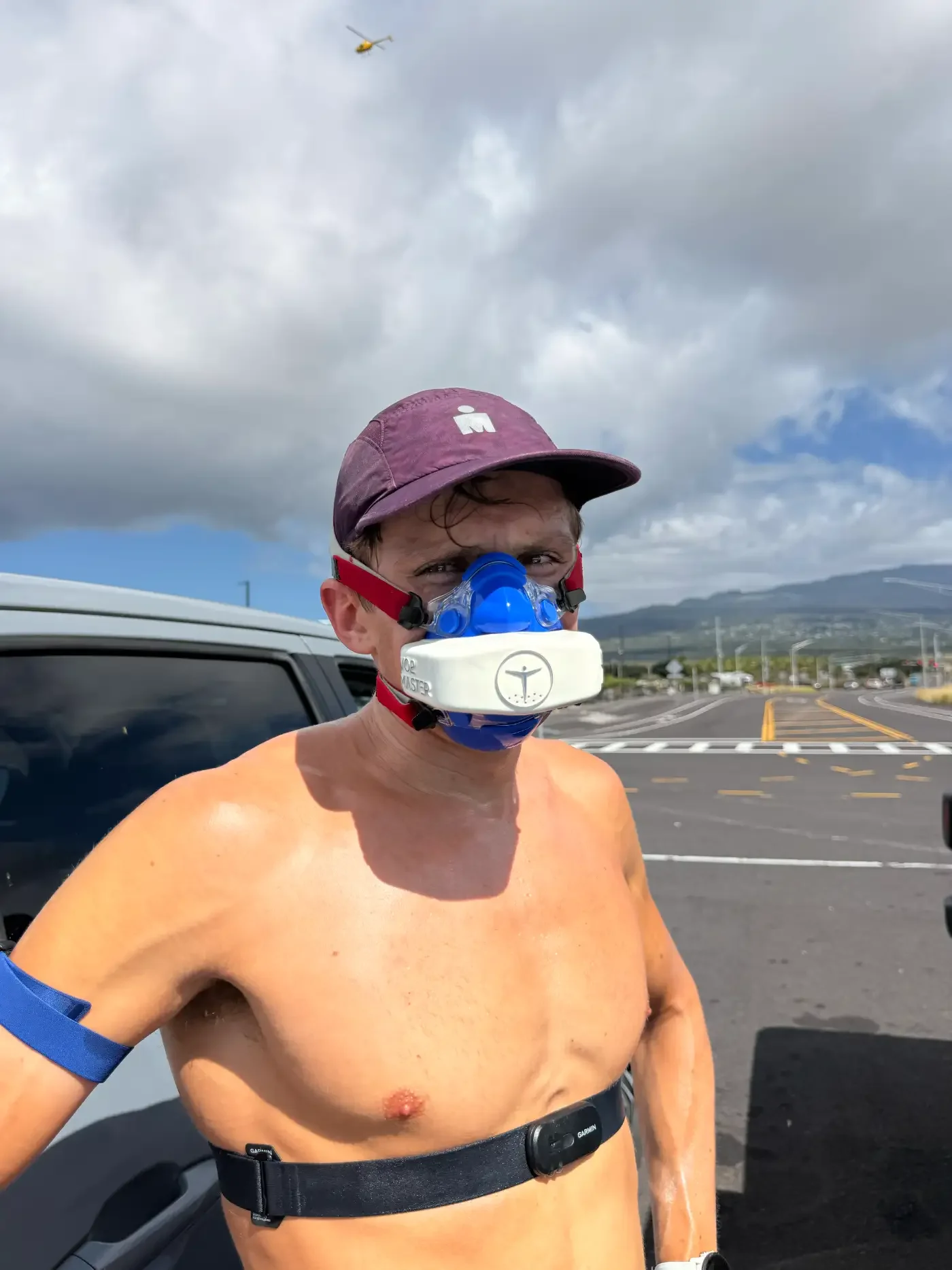
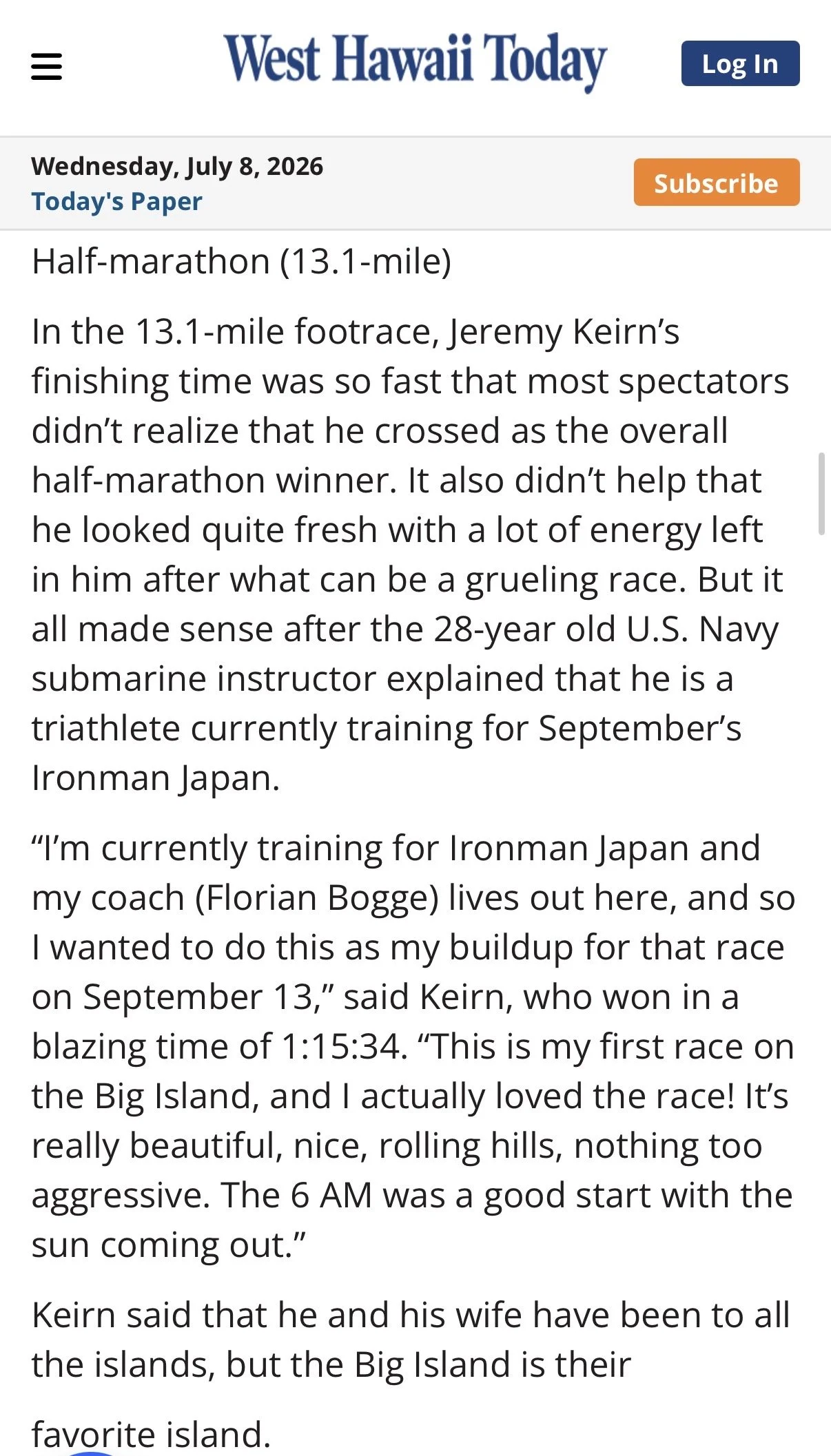
Jeremy is a 28-year-old U.S. Navy submarine instructor and, two weekends ago, he was the fittest-looking man on the Big Island. He won the half marathon here in 1:15:34 - the local paper noted he crossed the line looking fresh enough that spectators didn't realize he'd won. When they asked him why he was racing on the island at all, his answer made my week: he's building toward September's Ironman Japan, and his coach lives here.
Jeremy arrived as a runner a 1:22:20 half PB - with Ironman ambitions and the classic single-weapon problem: long-course racing doesn't reward your best discipline, it punishes your worst. His run couldn't express itself while the bike overdrew the account and the swim gave away minutes he'd never see again.
So we've been re-ordering the athlete, patiently. The run maintained, not chased — it takes care of itself, as 1:15 in a build-up race suggests. The bike built deliberately. The swim treated as the honest limiter - including open-water racing on the calendar in Japan ahead of Ironman Japan on September 13, because race starts are a skill you can't build in a pool. At Ironman Texas he ran 2:57 off the bike, which tells you what happens when the engine stops leaking.
The other half of the work is invisible in results: Jeremy's eagerness is a gift with a cost. A Navy instructor does not need to be taught discipline - he needs to be told, by someone he trusts, when not to use it. We spend as much time deciding what to leave out as what to put in. That's the build: engine first, patience always, and the results arriving on schedule.
Every athlete on this page started with a fit call. If your situation is this specific, that's exactly what coaching is for.
Coaching — $400/month
Fewer than 35 athletes. 12-week minimum. Built by hand every week.
Your plan, rebuilt weekly around your actual calendar, recovery, and data — never a template
Weekly 1:1 call (20–30 min) plus unlimited async feedback in TrainingPeaks
Testing, zones, and progression managed for you — including WKO5-level analysis of your physiology
Fueling and race-execution guidance, from daily training to race morning
Responses within 24 hours, Mon–Fri
TrainingPeaks Premium included
Tell me a bit about your goals, sport, and current situation. If it feels like a strong fit, I’ll send the next step and we’ll talk through what coaching would look like.
We make sure coaching is the right fit for your goals, schedule, and budget.
We look at where you are now and what a realistic next step would be.
You leave with clarity, even if coaching is not the right option right now.
Book a Free Coaching Fit Call
Private — $600/month
For athletes in a big build who want me closer. Everything in Coaching, plus: same-day responses, race-week support (pacing plan, taper management, day-before call), quarterly deep-dive performance review, and priority access to Kona camp dates.
A free 20-minute conversation about your goals and whether coaching fits. Coaching is $400/month with a 12-week initial commitment.
Want a more hands-on experience?
For select athletes, I also offer private Performance Intensives in Kona or at your location. These are built for athletes who want focused in-person work on technique, execution, testing, strategy, and race preparation.
FAQs
-
Most athletes and I talk once per week by phone or FaceTime. You also get ongoing feedback through TrainingPeaks and direct messaging between calls.
-
I usually build and adjust training week by week so it fits your real schedule, recovery, and progress while still keeping the bigger picture clear.
-
TrainingPeaks is the main platform because it allows strong structure, clear communication, and deeper performance analysis. If you use something else, we can talk about what makes the most sense.
-
That depends on your goals, training phase, and schedule. For many athletes, 2 to 4 performance checks per year is enough. They do not always need to happen in a lab.
-
Yes. I hold official USA Triathlon credentials and continue to develop as a coach through ongoing education, hands-on experience, and years of working with endurance athletes across different levels and disciplines.
-
Yes. For select athletes, I also offer private camps in Kona or at your location.